
A glossary about diamonds
In the field of precious stones it’s essential to know and distinguish between all the different qualities this is even more important because of the very few differences that may exist between a natural and a synthetic gem.
Diamonds:
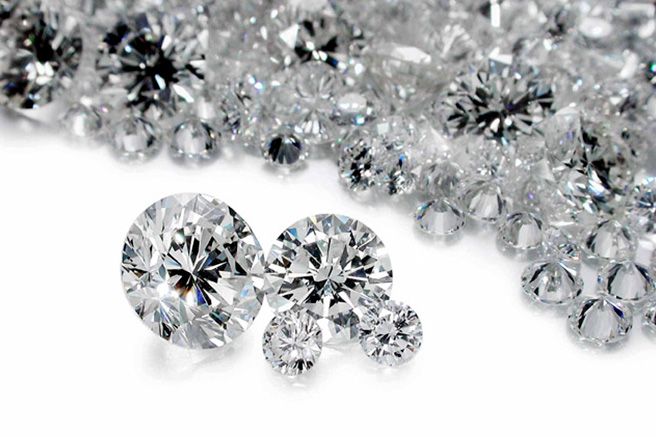
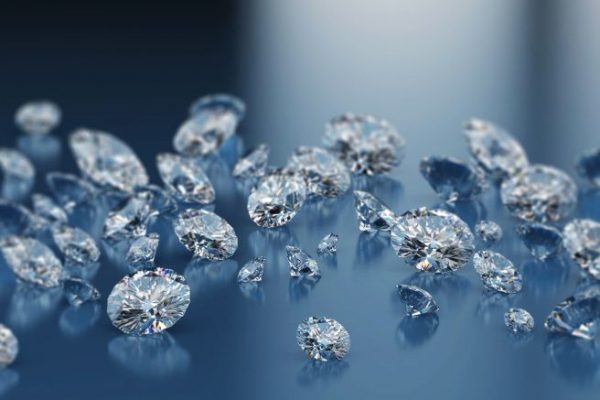
Diamonds are formed of just one chemical element: carbon. Its exceptional hardness is given by its special molecular composition. Its name comes from the Greek “adamas” which means “indomitable”: meaning that its special characteristics were already known back in ancient times. Diamond trading as we know it today began around mid 1800, when the first mines were discovered in South Africa and were then subjected to intense exploitation.
Precious and semi-precious stones:
Made from working and cutting minerals or aggregates of organic or plant minerals, they are divided in two categories depending on purely aesthetic qualities, such as brilliance, hardness and rarity. The most famous precious stones are the emerald, ruby, sapphire and, the most precious of all, the diamond.
Synthetic stones:
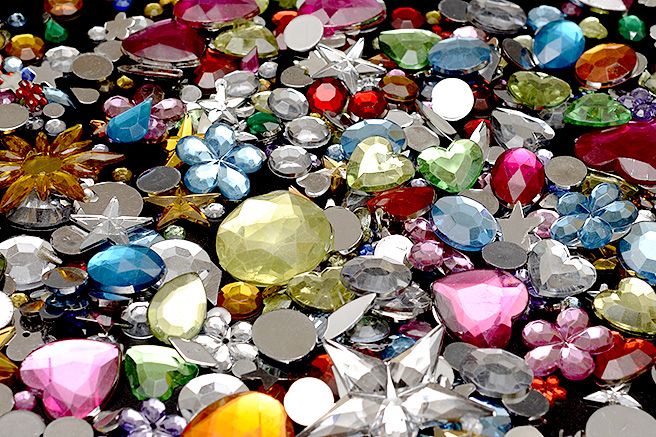
These are stones made in workshops from synthetic processes using cutting techniques that attempt to reproduce the luminous and optical effects of their big sisters. The greatest efforts, of course, are to reproduce diamonds and, over recent years, with the advent of moissanite, some really amazing results are being achieved. It is hard to distinguish between the two stones, because their physical properties are also very similar, so an expert gemmologist should be relied on who can distinguish between them with specific laboratory tests.
For this reason, at Dimensione Pietre Preziose we provide certified diamonds, in order to mantain the quality standards we have been committed to since the foundation of our company in 1995. Thanks to our three offices, Padova, Valenza and Arezzo, we can supply the main part of the Italian precious and semi-precious stones market.
Authenticity certificates
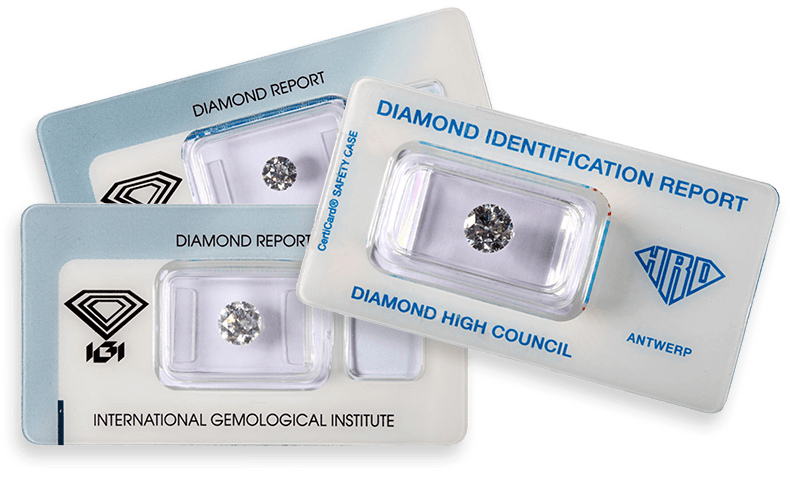 They certify the authenticity and characteristics of the diamond. They are named after the certifying board: IGI (International Gemmology Institute), HRD (High Counsel for diamonds) and GIA (Gemological Institute of America).
The Gemological Institute of America is one of the oldest precious stone certification institutes in the worlds . GIA certified diamonds are therefore more valuable and carry with them the guarantee of being evaluated and classified by a team of experts boasting an unparalleled know-how in gems.



4C Factors Method
When evaluating diamonds it’s important to know the parameters of the famous 4C introduced by G.I.A.
• Carat • Color • Clarity • Cut
Then you have to add Fluorescence, the visible light that the diamonds emits exposed to UV rays (ultraviolet).
Weight – Carat
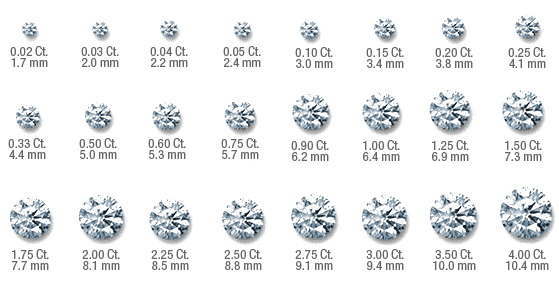
This is the weight measure unit diamonds. A carat is 0.20 grams and its name probably originates from the carob seed, because right up to the beginning of the 20th century, given their amazingly uniform weight, carob seeds were used as counterweights on the scales when the precious stones were being weighed.
Colour
This is one of the four factors that define the price of a diamond and is measured in the D-Z scale. According to the letter assigned, the diamond passes from a blue/white colour (D) to a whitish colour (K-M) through to the shades of yellow (Z).

Clarity
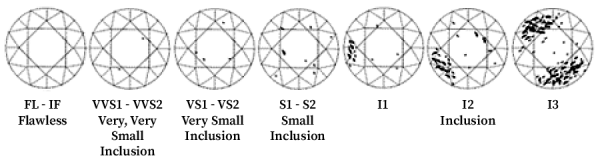
The level of clarity (purity) of a diamond is defined by a scale that gives the quantity, size and position of the imperfections of the diamond. A completely pure diamond is one that, when seen through a magnifying lens magnified ten times, has no sort of inclusion or imperfection. The imperfections and their position are given in the attached certificate with the diamond and become the distinctive features of the stone and therefore render them unique. It is pointless to state that diamonds with the highest level of clarity (F = Flawless) are of enormous value, given their rarity.
Cut
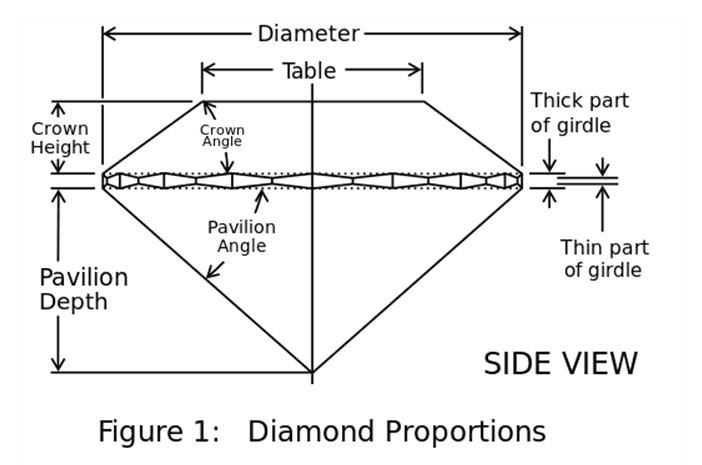
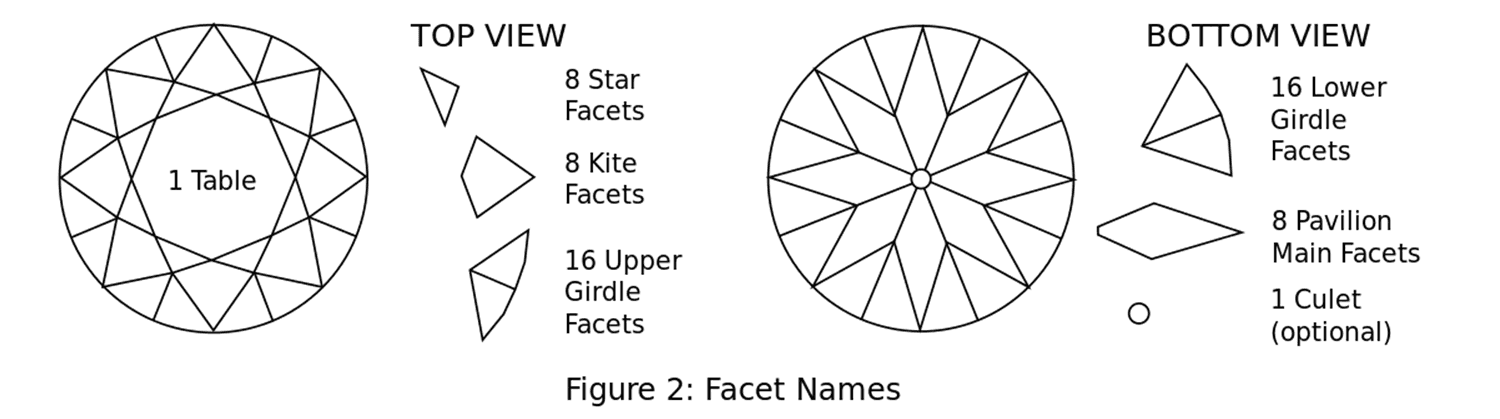
This is the only characteristic in a diamond that is given by man’s hand. The type and quality of the cut have an important effect on the brilliance of the stone, and often define its specific beauty.
The main cuts

Just contact us for a free price quotation
For info please contact us by contact form or email to: info@dimensionepietre.com